

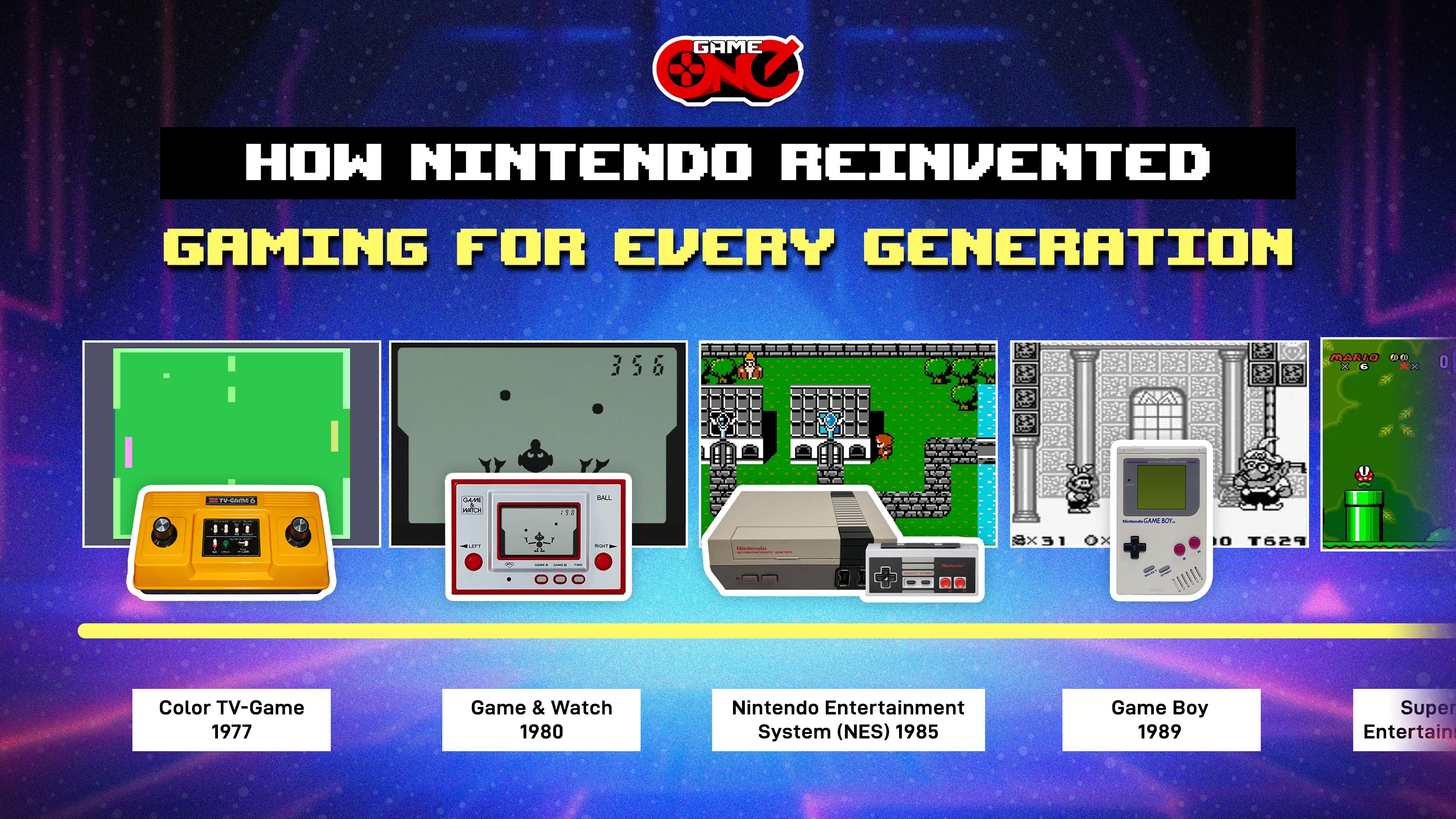
For nearly 50 years, Nintendo has shaped the gaming industry through creativity, innovation, and unforgettable experiences. From the humble Color TV-Game in 1977 to the powerful Nintendo Switch 2, every console introduced new ideas that changed how people play. Let's take a journey through Nintendo's console history and explore the milestones that turned the company into one of gaming's most iconic brands.
Nintendo's journey into the video gaming systems world officially began with the Color TV-Game in 1977. At a time when home gaming was still in its infancy, the console brought simple electronic entertainment into households, giving families a new way to play together.
Unlike today's consoles with massive game libraries, each Color TV-Game unit came with a single built-in title. Depending on the model, players could enjoy games like Light Tennis, a two-player game inspired by Pong, or Racing 112, a straightforward arcade-style racing game. Although its gameplay was limited, the console demonstrated the potential of home video gaming and laid the foundation for Nintendo's future success in the industry.
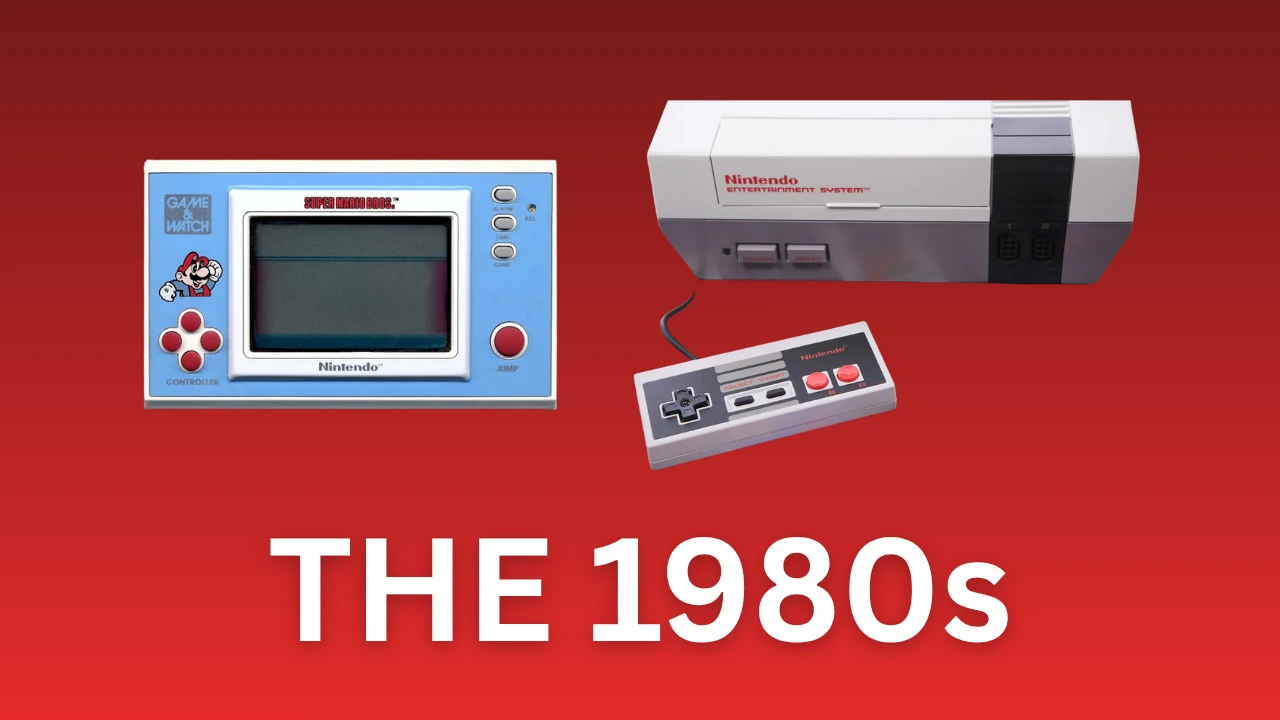
The 1980s marked a turning point for Nintendo, introducing groundbreaking hardware that transformed the gaming industry. It began with the Game & Watch in 1980, Nintendo's first handheld gaming system designed by Gunpei Yokoi. Combining a built-in game with a digital clock, it also introduced the revolutionary D-pad, a control design that would become the standard for future game controllers and lay the foundation for Nintendo's handheld legacy.
In 1985, Nintendo changed gaming history with the Nintendo Entertainment System (NES). Released as the Famicom in Japan, The NES revived consumer's confidence in home gaming after the 1983 crash through strong quality control and standout software. It introduced iconic franchises such as Super Mario Bros., The Legend of Zelda, Metroid, Mega Man, and Castlevania, while its library of over 500 games helped redefine home gaming.
Nintendo closed the decade with another revolution: the Game Boy in 1989. Its compact design, long battery life, and portability made gaming possible anywhere, while the launch of Tetris turned it into a worldwide phenomenon. With over 100 million units sold and a library of more than 450 games, including Pokémon, Super Mario, The Legend of Zelda, and Kirby, the Game Boy became one of the most successful handheld consoles ever, paving the way for future systems.

The 1990s was one of Nintendo's most influential decades, marked by major technological advancements and unforgettable games. The Super Nintendo Entertainment System (SNES) elevated 16-bit gaming with richer graphics, immersive sound, and classics like The Legend of Zelda: A Link to the Past, Super Mario World, and Donkey Kong Country. Nintendo also introduced groundbreaking features such as the Super FX Chip, enabling impressive 3D effects, while accessories like the Super Game Boy expanded how players experienced their favorite titles.
Nintendo continued to dominate handheld gaming with the Game Boy lineup. The slimmer Game Boy Pocket and colorful Game Boy Color refreshed the platform, while accessories like the Game Boy Camera and Game Boy Printer showcased Nintendo's creativity. During this time, franchises such as Pokémon exploded in popularity, turning the Game Boy into a global phenomenon and introducing millions of players to portable gaming.
The decade also saw the arrival of the Nintendo 64 in 1996, bringing true 3D gaming into homes. Iconic titles like Super Mario 64 and The Legend of Zelda: Ocarina of Time redefined game design and are still regarded as some of the greatest games ever made. With innovations like the Rumble Pak and a steady stream of genre-defining releases, Nintendo cemented the 1990s as a golden era that shaped the future of the gaming industry.
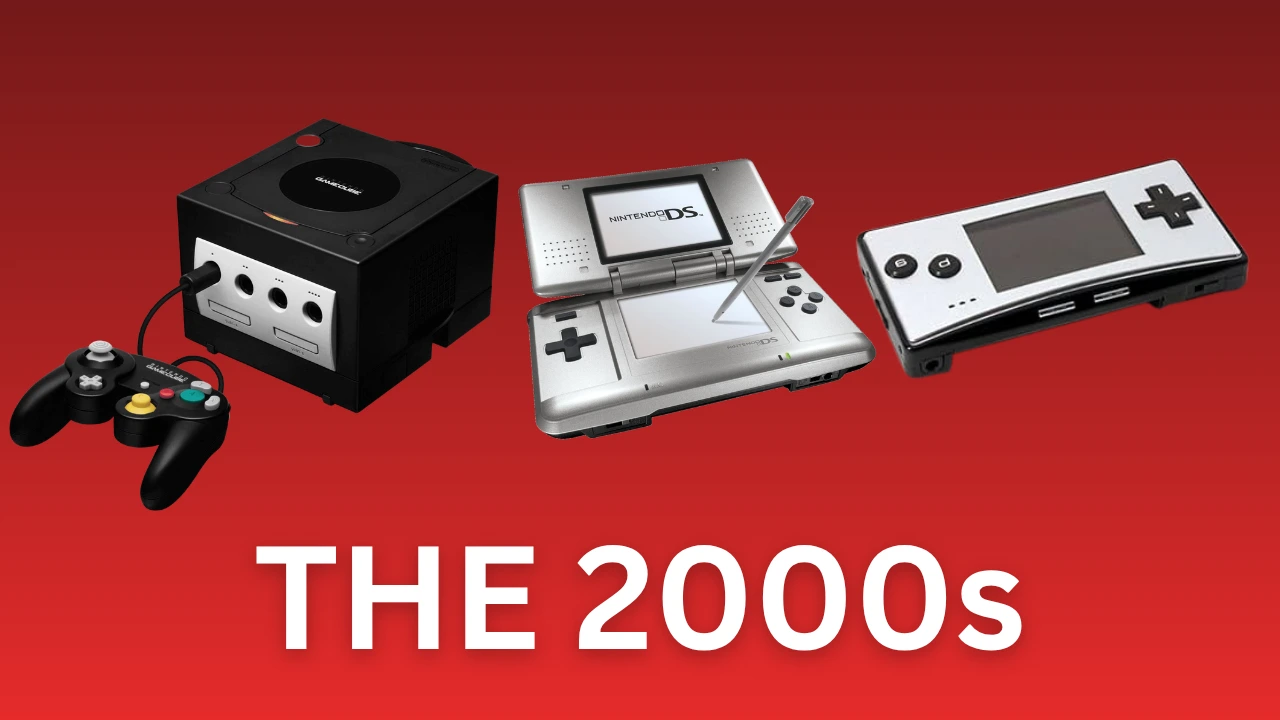
The 2000s marked another era of innovation for Nintendo with the launch of the Nintendo GameCube (2001) and the groundbreaking Nintendo Wii (2006). While the GameCube introduced Nintendo's first disc-based home console, the Wii transformed gaming with its motion-controlled Wii Remote, making games more accessible and enjoyable for players of all ages.
Nintendo also strengthened its dominance in handheld gaming with the Game Boy Advance (2001) and its redesigned models, the Game Boy Advance SP and Game Boy Micro. In 2004, the company introduced the Nintendo DS, featuring dual screens and touch-screen controls that changed the way people interacted with games. Later models like the Nintendo DS Lite and
Nintendo DSi added sleeker designs, brighter displays, cameras, and online features.
Throughout the decade, Nintendo proved that innovation mattered more than raw hardware power. By combining creative gameplay with family-friendly experiences, the company expanded gaming to a wider audience and laid the foundation for many of its future successes.

The 2010s saw Nintendo continue to innovate while celebrating its rich gaming history. In 2011, the Nintendo 3DS introduced glasses-free 3D gaming to handheld consoles, followed by the Nintendo 2DS and New Nintendo 3DS, offering improved designs and features. In 2016, Nintendo also released the NES Classic Edition, a miniature version of the original NES preloaded with 30 iconic games, allowing both longtime fans and new players to relive classic adventures.
Nintendo entered the HD era with the Wii U in 2012, featuring a unique GamePad controller with a built-in touchscreen that enabled dual-screen gameplay. While the console had modest commercial success, many of its innovations helped shape Nintendo's next generation of hardware.
In 2017, Nintendo launched the Nintendo Switch, a hybrid console that seamlessly transforms between a home console and a handheld device. Combined with blockbuster titles like The Legend of Zelda: Breath of the Wild, Super Mario Odyssey, and Animal Crossing: New Horizons, the Switch became one of Nintendo's best-selling consoles and redefined gaming for a new generation.
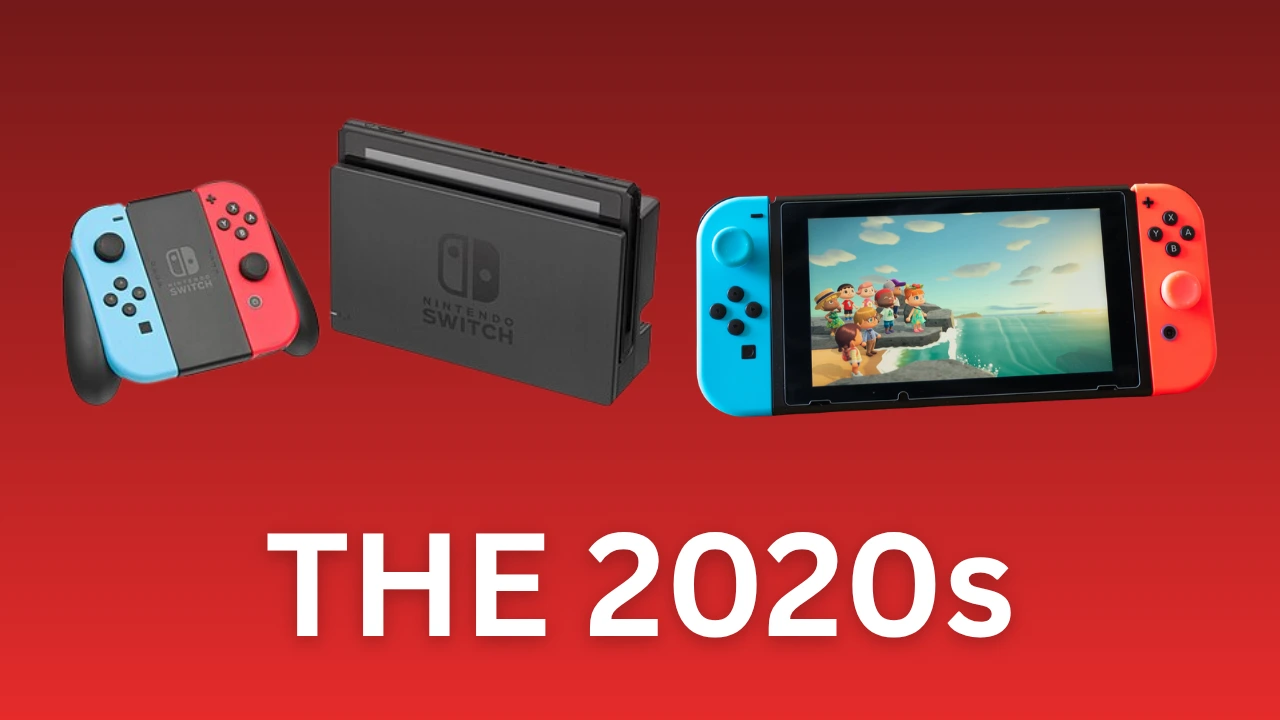
Nintendo entered the 2020s by celebrating its legacy with the Game & Watch: Super Mario Bros. (2020) and Game & Watch: The Legend of Zelda (2021). Inspired by the original Game & Watch handhelds, these collectible systems included classic games, themed clocks, and special anniversary Easter eggs, giving longtime fans a nostalgic way to relive Nintendo's history.
Nintendo also continued the success of its hybrid gaming concept with the launch of the Nintendo Switch 2 in 2025. Building on the original Switch, it features a larger display, improved performance, redesigned magnetic Joy-Con controllers, and enhanced gameplay while maintaining the flexibility of playing both at home and on the go.
From celebrating iconic franchises to advancing hybrid gaming, Nintendo continues to blend nostalgia with innovation, proving that its commitment to creating fun and memorable experiences remains stronger than ever.
Nintendo's history is more than a timeline of consoles,it's a story of constant innovation and unforgettable experiences. From the Color TV-Game to the Nintendo Switch 2, each generation introduced new ideas that shaped the gaming industry and inspired millions of players around the world.
Rather than focusing solely on powerful hardware, Nintendo has always prioritized creativity, accessibility, and fun. That philosophy has helped the company create timeless franchises, redefine how people play, and connect generations of gamers. As Nintendo continues to innovate, one thing remains certain: its legacy will continue to influence the future of gaming for years to come.















Comments